
Few debut albums have arrived with the confidence, polish, and lasting influence of The Cars self-titled debut album, released on June 6, 1978. At a time when rock music was splintering into arena rock, punk, disco, and the emerging new wave movement, The Cars somehow managed to bridge all of those worlds. Their self-titled debut sounded futuristic without sacrificing melody, combining sleek synthesizers, crunchy guitars, irresistible hooks, and emotionally detached vocals into a style that became one of the defining sounds of the late 1970s and early 1980s.

Yes this is the Candy-O back cover, not the debut, but it's a signed art proof so--a nice image
The album eventually sold more than six million copies in the United States and remains one of the most successful debut albums in rock history. Even more remarkably, nearly every song has become familiar to classic rock audiences, with several tracks receiving decades of steady radio airplay.
A Band Years in the Making
Although The Cars seemed to appear overnight, the band's story had been years in the making.
Singer, guitarist, and principal songwriter Ric Ocasek first met bassist and vocalist Benjamin Orr in Columbus, Ohio, during the late 1960s. The two became close friends and spent years playing in various bands before relocating to Boston, Massachusetts, where the city's vibrant club scene provided countless opportunities.
Boston was becoming a hotbed for original music in the mid-1970s. Alongside groups like Aerosmith and later The J. Geils Band, local clubs gave emerging artists a place to develop distinctive sounds. Ocasek and Orr eventually recruited guitarist Elliot Easton, keyboardist Greg Hawkes, and drummer David Robinson, completing what would become the classic Cars lineup.

Each member brought something unique. Hawkes had studied at Berklee College of Music and had extensive knowledge of synthesizers, while Easton's melodic guitar style drew from rockabilly, country, and classic rock. Robinson, formerly of the proto-punk band The Modern Lovers, contributed both artistic vision and an eye-catching visual aesthetic that helped shape the band's image.
Songs Perfected Before Recording
One reason the debut album sounds so confident is that many of its songs had already been performed live for years.
Rather than writing in the studio, Ric Ocasek refined songs through countless performances around Boston. By the time the band entered the recording studio, tracks like "Just What I Needed," "My Best Friend's Girl," "Good Times Roll," and "You're All I've Got Tonight" were already audience favorites.
Because the arrangements had been road-tested, the band spent relatively little time reinventing the material. Instead, the focus shifted toward capturing polished performances while preserving the songs' energy.
Roy Thomas Baker Brings Precision And Punch
Finding the right producer proved crucial.
Producer Roy Thomas Baker had recently earned worldwide recognition for his elaborate work with Queen, including A Night at the Opera with the accompanying royal achievement of having produced "Bohemian Rhapsody." But Baker immediately recognized that The Cars didn't need theatrical production as much as sonic clarity and precision.

Roy Thomas Baker
Recording sessions took place primarily at AIR Studios in London, with additional work completed at Rondor Studios. Baker encouraged meticulous performances and layered vocal harmonies while allowing each instrument its own sonic space.
Unlike many late-1970s rock albums, where guitars dominated the mix, Baker treated Greg Hawkes' synthesizers as equal partners. The result created a sound that felt modern without overwhelming the songs.
Part of Baker's magic touch also involved "pushing the tape" to the limit. Recording on magnetic tape was somewhat limited in that if the volume levels of tracks got too high, the sound could distort. Wary of this, many producers and engineers would take great pains to stay well within the limits of the tape. Baker, however, liked to push the levels recorded onto the tape to a point at which distortion was just creeping in. As a result, his mixes sound full of energy and almost combustible.
Baker was also known for demanding numerous vocal takes and he also had the group singing all together on choruses. He then stacked many takes of these vocals together to create the effect heard on tracks like "My Best Friend's Girlfriend".
In terms of lead vocals, Ric Ocasek's understated vocal style contrasted beautifully with Benjamin Orr's smoother, warmer voice, giving the album variety despite Ocasek having written nearly every song.
Baker also worked with drummer David Robinson to creatively add Syndrums to the tracks, for example in the intro to "Good Times Roll." He was also unafraid to feature drum fills prominently in the final mix. Just listen to the toms punching out with conviction during that first build up in "Just What I Needed" as one of many examples.
Benjamin Orr's Breakout Performances
Although Ric Ocasek served as chief songwriter, Benjamin Orr became one of the album's secret weapons. His lead vocal on "Just What I Needed" transformed the song into an unforgettable radio hit. Ocasek believed Orr's richer voice better suited certain songs such as "Bye Bye Love", and that willingness to divide lead vocals became one of The Cars' trademarks.

Orr would also shine on "Moving in Stereo," delivering one of the album's coolest and most mysterious performances.
The contrast between Ocasek's quirky, detached delivery and Orr's effortless confidence gave listeners two distinct personalities within one band.
Lyrical Affinity
The impact of the album cannot be discussed without mentioning Ocasek's mastery of the quirky and clever lyric. He was influenced by writers like Lawrence Ferlinghetti and Richard Brautigan and his lyrics were often constructed from one part beat poetry, one part razor-sharp pop sensibility:
You've got your nuclear boots
and your drip-dry glove
-"My Best Friend's Girl"
And who can forget:
Let the good times roll
Let them make you a clown
Let them leave you up in the air
Let them brush your rock and roll hair
-"Good Times Roll"
The Guitar and Synth Balance
One of the album's greatest achievements lies in how naturally it blended traditional rock instrumentation with cutting-edge electronics.
Greg Hawkes used synthesizers not as flashy effects but as melodic instruments. Rather than dominating arrangements, they filled spaces between Elliot Easton's inventive guitar work. His non-flashy solos and synth embellishments filled spaces with memorable hooks and lead lines that helped define the songs. He also contributed creative sound effects and backing vocals.
That balance helped define new wave without abandoning rock's accessibility.
Easton deserves equal credit for avoiding lengthy solos in favor of concise, memorable melodic statements. His solos often lasted only seconds, yet they became some of the most recognizable guitar moments of the era. His solo in "My Best Friend's Girl" is an example of his varied influences, bringing a burst of rockabilly twang into the track, making for another example of genre-bending on the record.
Instant Hits
The album generated three major singles.
"My Best Friend's Girl" became an international success thanks to its infectious riff and playful lyrics. Ocasek reportedly borrowed inspiration from Buddy Holly's rhythmic style while giving the song a thoroughly modern production.
"Just What I Needed" became the band's breakthrough in America after receiving heavy radio airplay before it was even officially released as a single. Hawkes synth lines are instantly recognizable and Orr's spot-on vocal performance with his characteristic cool swagger made the track irresistible.
"Good Times Roll" showcased the band's sophisticated production and subtle humor, becoming another enduring classic. Great drum parts, including the aforementioned Syndrum accents, great lyrics, and group vocal harmonies (multi-tracked many times over) made it a standout track.
Interestingly, several songs that were never major singles—including "Moving in Stereo", "All Mixed Up", and "You're All I've Got Tonight"—would eventually become just as beloved among fans.
"Moving in Stereo" Finds New Life
One fascinating chapter in the album's history came years later.
Although "Moving in Stereo" was never released as a single, it exploded in popularity after appearing in the 1982 film Fast Times at Ridgemont High. The memorable pool scene featuring Phoebe Cates permanently linked the song with the movie and introduced it to an entirely new generation. A later cameo in Stranger Things 3 also brought new life for the track. As a result, many listeners mistakenly assume it was one of the album's biggest original hits.
A Lasting Influence
The Cars demonstrated that catchy pop songs could coexist with experimental production.
Artists ranging from Weezer and Foo Fighters to The Killers, Fountains of Wayne, and countless power-pop and alternative bands have cited The Cars as a major influence. Even artists outside rock admired the album's economical songwriting and polished arrangements.
Ric Ocasek later became one of rock's most respected producers, working with bands including Weezer, Bad Religion, No Doubt, and Guided by Voices. Many of the production ideas he embraced during The Cars sessions carried into those later projects.
A Landmark Debut
More than four decades later, The Cars remains one of rock's benchmark debut albums because virtually every element works flawlessly. The songwriting is concise without feeling simplistic, the musicianship is precise without becoming sterile, and Roy Thomas Baker's production sounds remarkably fresh even by modern standards.
Perhaps the album's greatest accomplishment is that it never chased trends. Instead, it quietly created one of its own. Blending power pop, rock, punk attitude, and synthesizer-driven innovation, The Cars introduced a sound that countless artists would emulate throughout the 1980s and beyond.
For many bands, a debut album serves as a promising first step. For The Cars, it was the arrival of a fully realized artistic vision—one that produced multiple timeless classics and permanently altered the landscape of popular music.
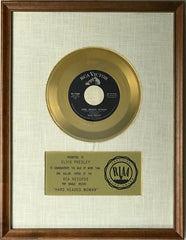
Interested in signed memorabilia like the item you see in this article? Check out our selection here. Interested in genuine RIAA Gold and Platinum record awards? Check out our selection of 100s of artists and titles here.
Want more content like this? If you're not a subscriber already, sign up for our free MusicGoldmine newsletter which comes out once a week. Go here to sign up.
Be the envy of all your friends! Get MusicGoldmine.com Music History in your Facebook feed each day. Just follow us on Facebook here.
All photos © MusicGoldmine.com 2018-2026 or public domain