
Before streaming playlists and social media promotion, record labels had a much more physical way of grabbing fans’ attention: giant cardboard standees, hanging mobiles, oversized album displays, and elaborate in-store cutouts that transformed record shops into miniature music museums.
During the 1970s and 1980s in particular, these promotional displays became a defining part of music retail culture. Walk into a mall record store in 1974 and you might see a towering Queen standee near shelves of their records. In 1979 a KISS display hanging over the cassette racks. Or by 1984 into the 90s, cardboard versions of Prince, Madonna, and Michael Jackson that greeted customers at the entrance.
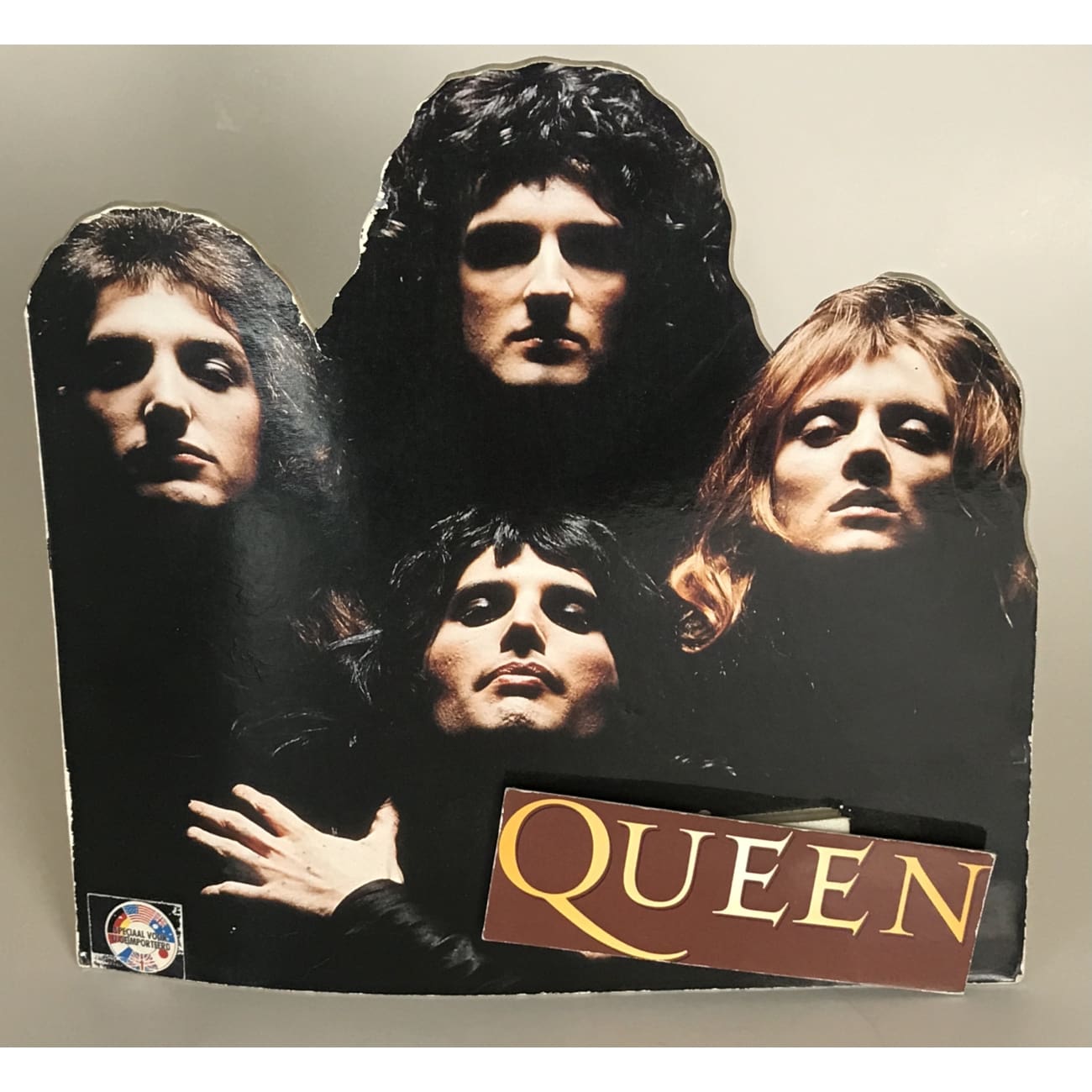
Original examples of 70s standees often have frayed edges... or worse
Today, surviving examples are some of the most fascinating and collectible artifacts from the golden age of record stores.
When Record Stores Became Pop-Culture Theaters
From the 1970s through 1990s, record stores were more immersive experiences and, because they were pre-streaming, they were the only place outside of occasional mail order options that people could buy music.
Chains such as Record Bar, Record World, Sam Goody, Tower Records, Virgin, and other record stores around the world competed aggressively for customers, especially in malls and urban shopping districts.
Accordingly, record labels invested heavily in point-of-purchase advertising because physical presentation mattered enormously. A dramatic standee could stop shoppers in their tracks and convince them to buy an album they had never heard before.
Stores often received life-size cardboard artist cutouts, giant album-cover reproductions, hanging ceiling mobiles, counter displays, window signage, or elaborate 3D promotional installations.
These displays were usually temporary. Most were intended to survive only for the duration of a marketing campaign, tour, or album release.
That temporary nature is exactly why authentic examples are so rare today.
The Glam-Rock Explosion of the 1970s
The 1970s produced some of the wildest and most visually inventive standees ever made.
Artists like David Bowie, KISS, Queen, and Alice Cooper understood the power of theatrical imagery long before MTV arrived. Led Zeppelin's inflatable promo dirigible balloons became an instant collectible. Record-store displays reflected the larger-than-life persona of the times.
A group of surviving 1970s era Queen promotional standees that quickly sold here on our website show just how scarce these pieces have become.
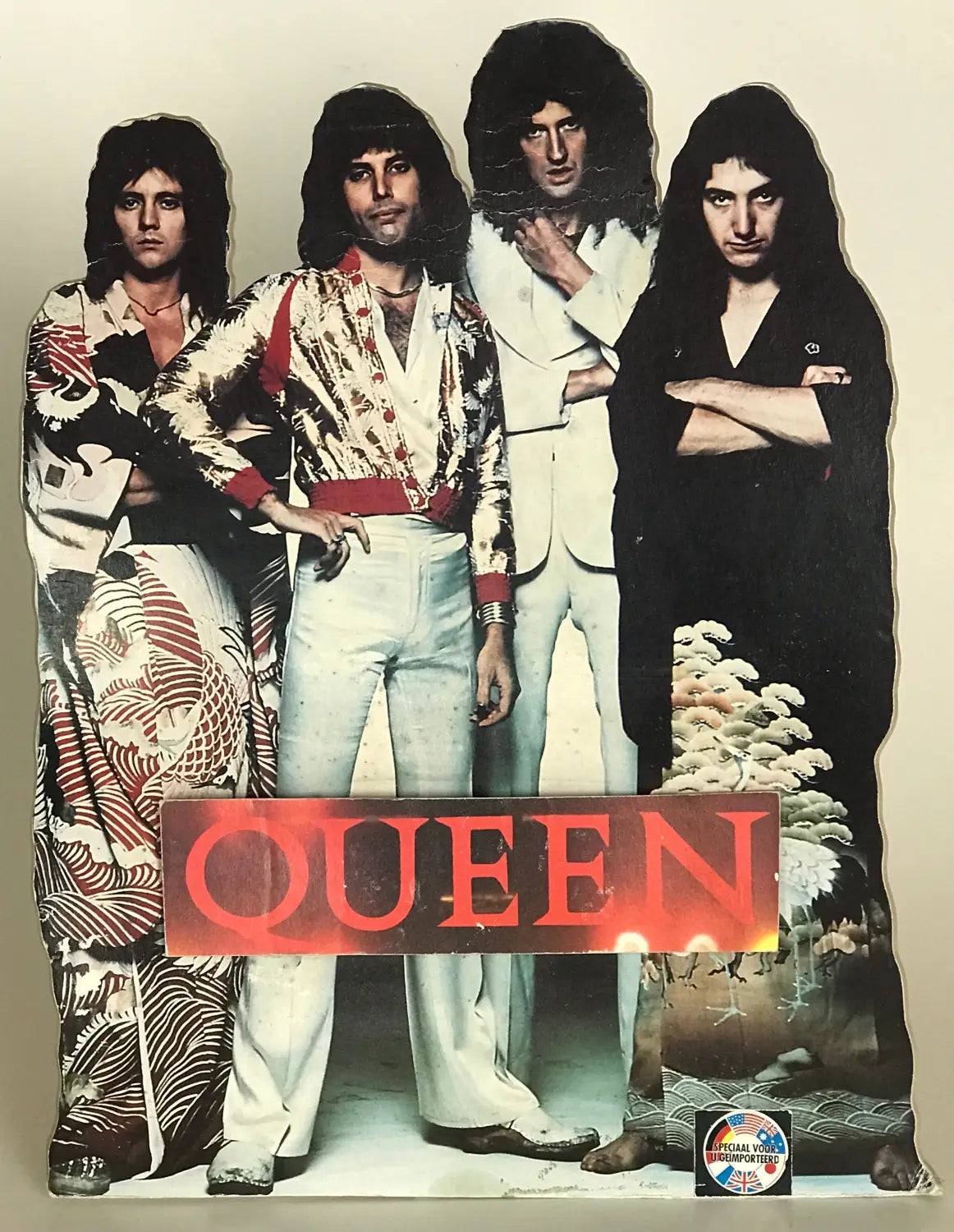
The displays featured dimensional logo artwork and fold-out rear supports intended for retail floor presentation like this:
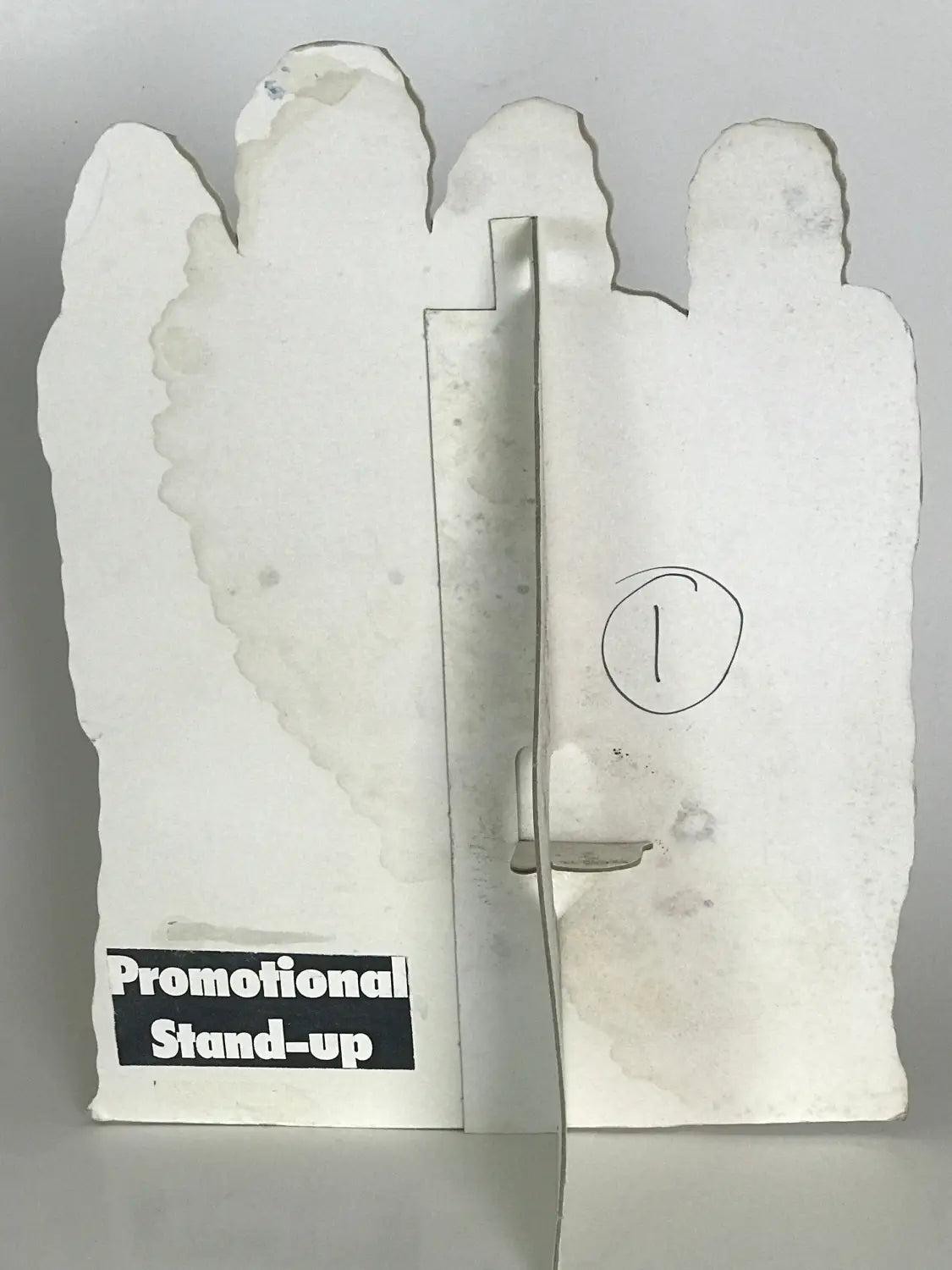
Many 1970s displays were handmade or semi-handmade compared to later mass-produced cardboard standees of the 1980s and 90s. Some included die-cut shapes, metallic foil accents, layered cardboard construction, moving parts, or even illuminated sections.
Because record stores reused displays until they literally fell apart, surviving examples are often heavily worn.
That wear can actually add charm for collectors, especially when old price stickers, handwritten promo notes, or distributor markings remain attached.
Tower Records and the Art Department Era
Few retailers embraced elaborate display art more aggressively than Tower Records.
By the 1980s, Tower Records stores were famous for massive in-store visual installations promoting major releases. According to the documentary Art Gods, Tower employed dedicated artists whose job was to build elaborate promotional displays for albums and tours. These weren’t simple cardboard signs.
Some displays included giant painted murals, suspended sculptures, oversized artist portraits, 3D album-cover recreations, and elaborate window installations
Promotions for artists such as The Rolling Stones and Prince turned stores into temporary art exhibits.
For younger fans, visiting Tower Records during a major release felt almost cinematic.
MTV Changes Everything
When MTV launched in 1981, music marketing became dramatically more visual.
Suddenly, artists weren’t just selling songs — they were selling instantly recognizable images and personalities.
Record labels adapted quickly.
By the mid-1980s, standees became larger, glossier, and far more sophisticated. Cardboard cutouts now featured high-resolution photography, vivid neon colors, and dramatic poses designed to replicate the energy of music videos.
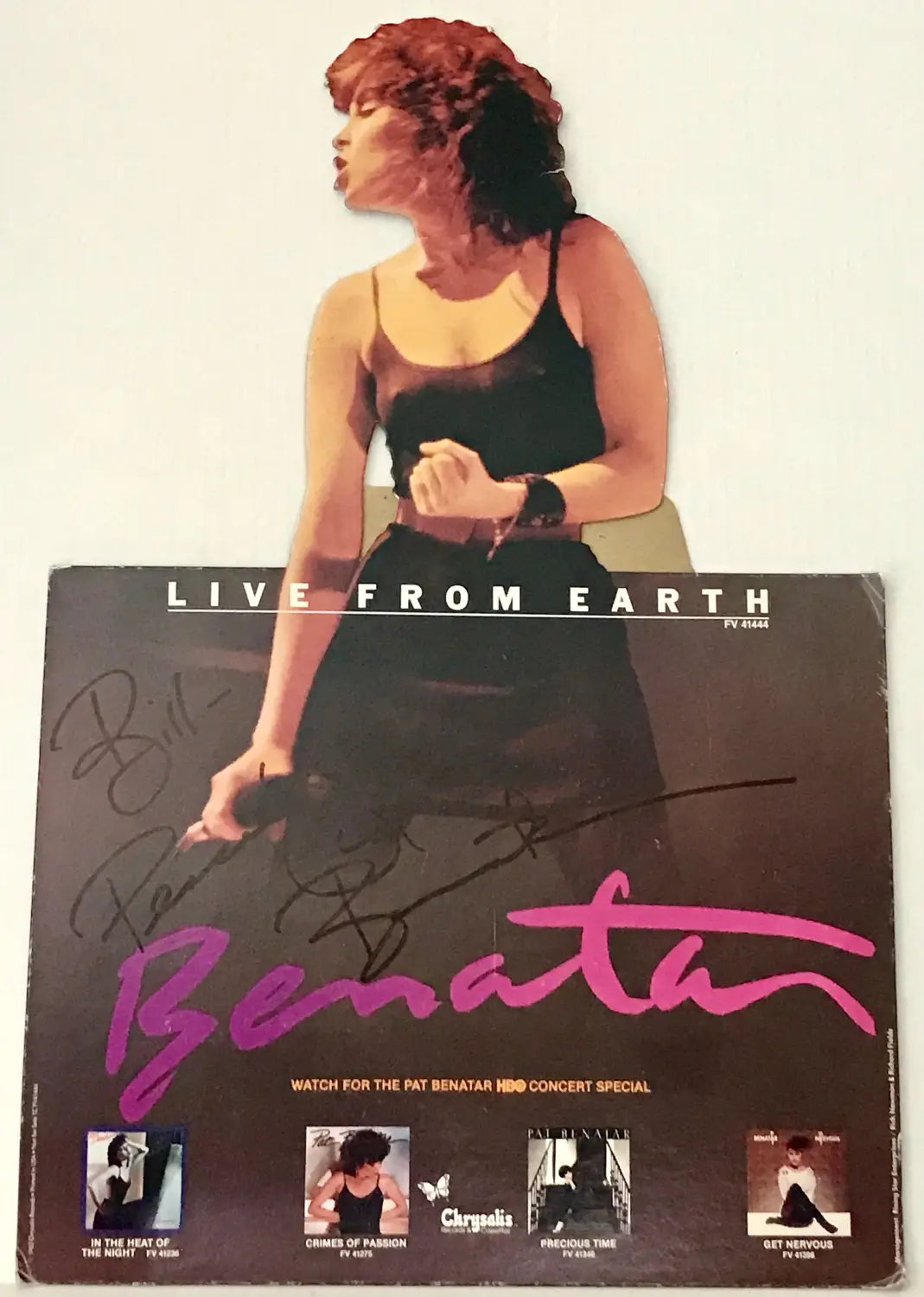
In-store appearances by artists would sometimes allow lucky record label or store staff to get a standee signed, like this 1980s Pat Benatar example
Few artists benefited more from this shift than Madonna. Her “Material Girl” and Like a Virgin era displays became fixtures in mall record stores across America. Lace gloves, layered jewelry, teased hair, and bold typography transformed her standees into instant visual icons.
Meanwhile, Michael Jackson dominated retail space during the Thriller and Bad eras. Giant cardboard displays promoted albums, cassettes, VHS releases, and merchandise simultaneously. Stores often placed Jackson displays near entrances because labels knew customers would stop in immediately.
The Rise of Mall Record Stores
The shopping mall boom of the 1980 and 90s helped fuel the popularity of standees.
Chains like Sam Goody, Camelot Music, Musicland, and Record Bar depended on visual merchandising to compete with neighboring stores. Teenagers often spent hours browsing record stores without buying anything immediately. Promotional displays helped create atmosphere and encouraged impulse purchases.
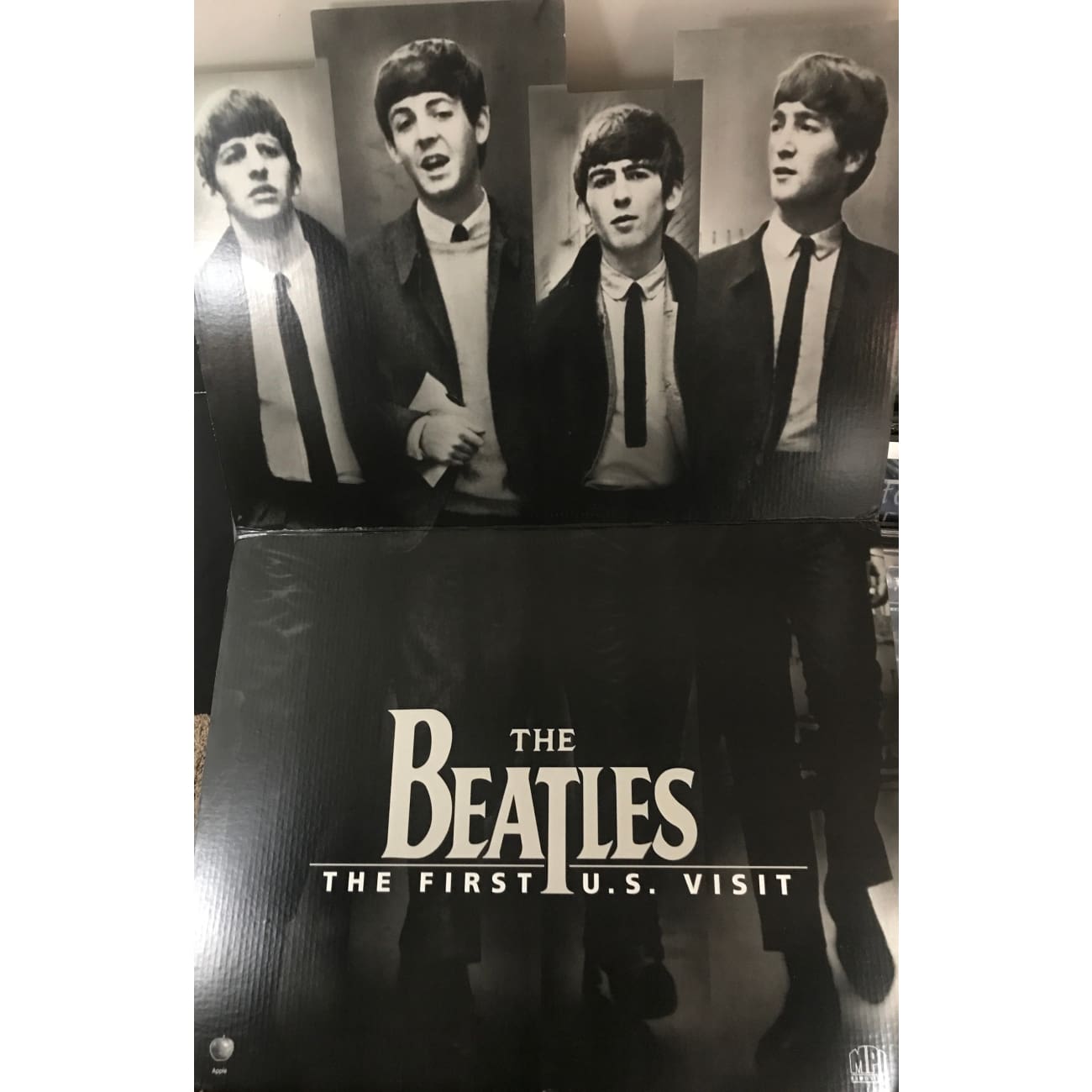
Beatles standee from 1990
Collectors today still remember giant listening stations, rows of cassette singles, walls covered with posters, hanging album mobiles, and artist cutouts beside the register
For many Gen X collectors, standees represent memories as much as memorabilia.
Why So Few Survived
Most standees were never intended to be saved. When promotions ended, stores usually either threw them away, folded them into storage rooms, or gave them to employees. Many were damaged them during removal and their cardboard construction made them very fragile and subject to fading, especially under store lighting and constant customer traffic.
Collectors today search for displays with original fold-out easels, minimal fading, intact edges, no water damage, and, ideally, original shipping boxes. Condition matters enormously because large cardboard displays deteriorate easily over decades.
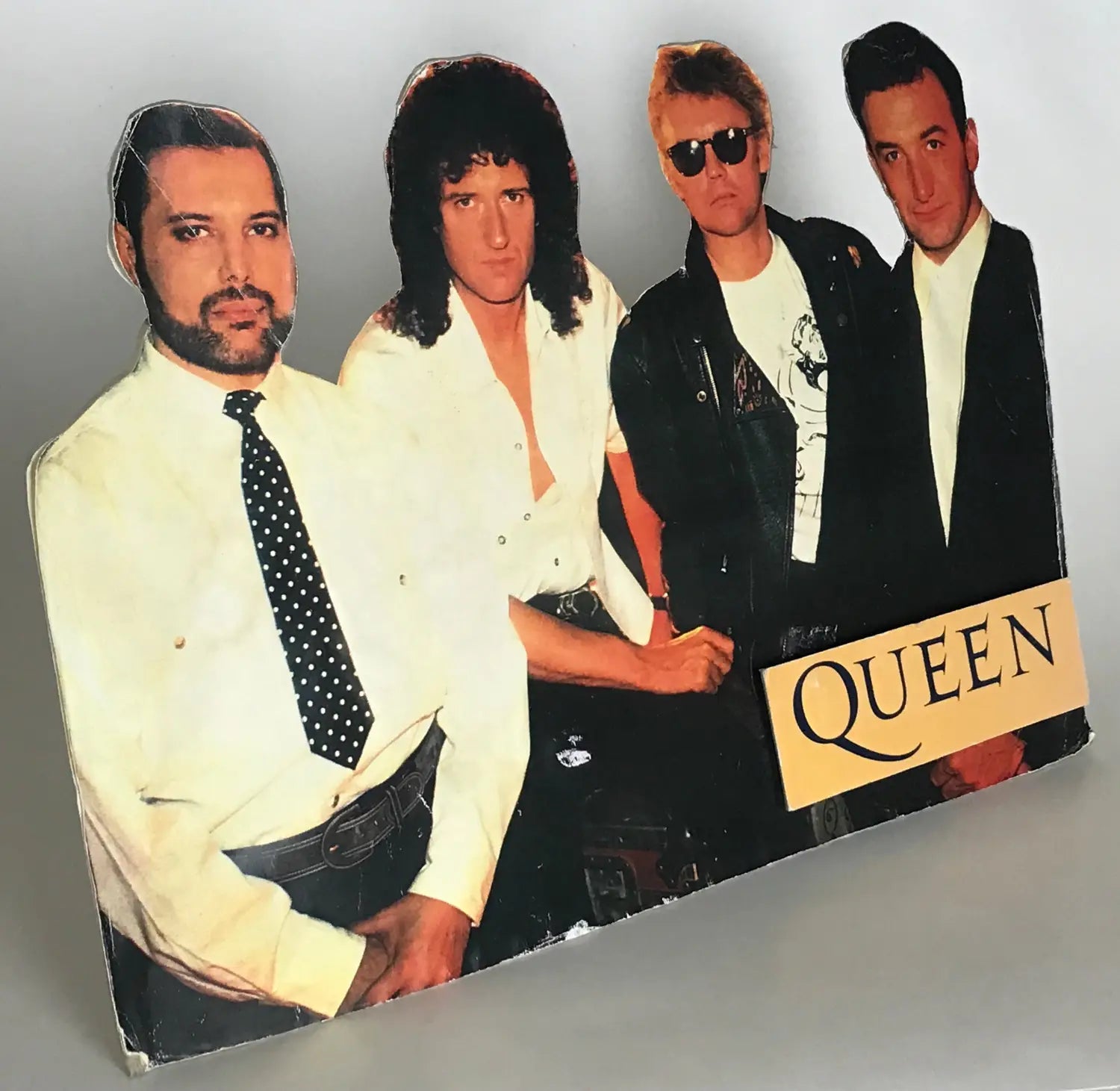
Ironically, the displays that survived often did so because an employee quietly took them home rather than throwing them into a dumpster.
The Transition to CDs
The late 1980s brought another major change to record-store displays: compact discs.
Retailers suddenly faced the problem of displaying tiny CD jewel cases in stores designed around displaying 12-inch vinyl records. Longbox CD packaging emerged partly to solve that issue.
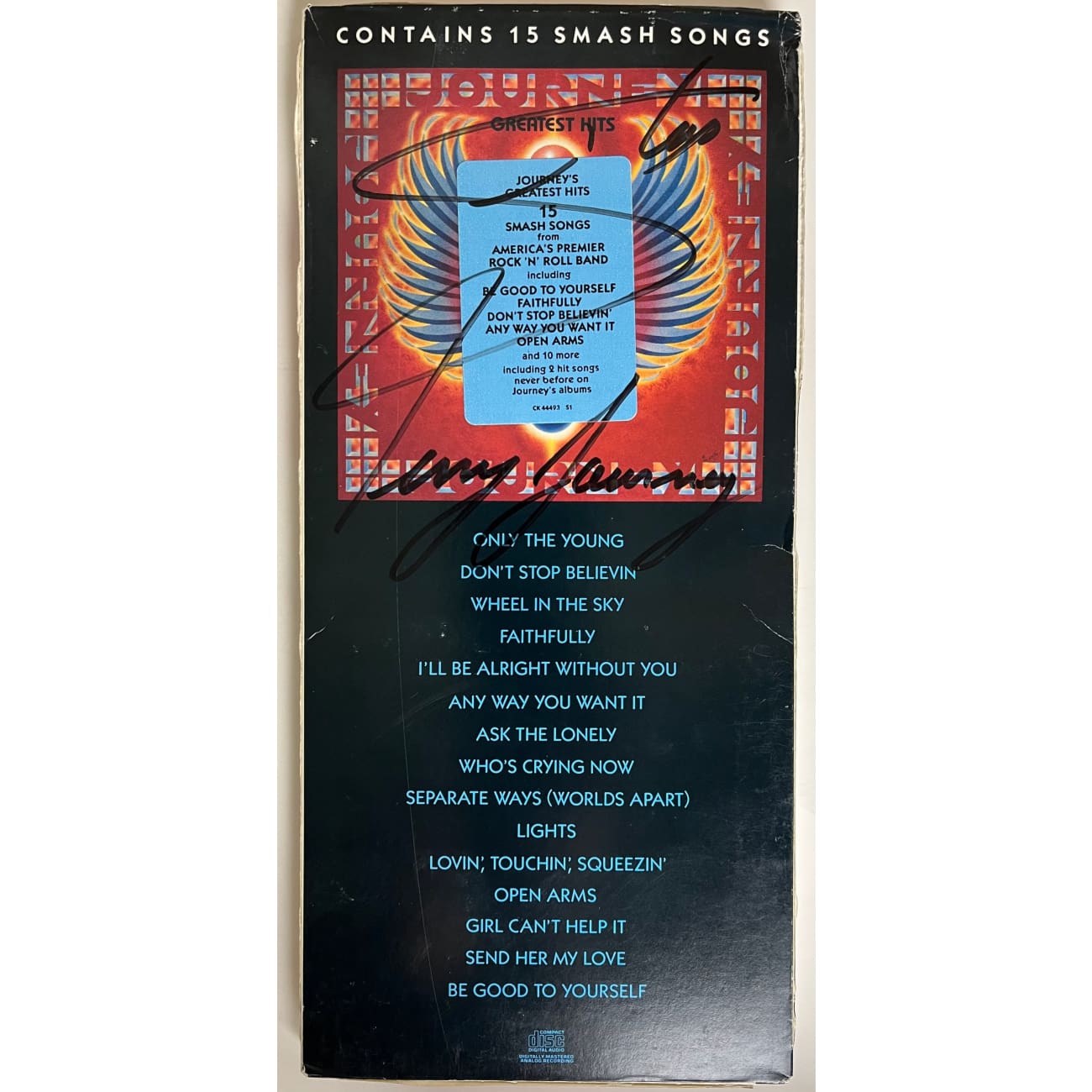
The CD "Longbox" helped record retailers keep utilizing their racks that had previously held LPs since they extended the CD box up to eye level
During the transition era, stores combined vinyl displays with cassette standees, CD longbox signage, and mixed-format promotional racks. The result was a chaotic but visually unforgettable retail environment.
Many collectors now seek transitional displays because they capture the exact moment music retail shifted from analog to digital.
The Hunt for Forgotten Treasures
Rare standees still appear in surprising places: Abandoned mall storage rooms, former distributor warehouses, radio stations, flea markets, estate sales, old record-store basements, and of course, in former record store and record label staff people's personal caches.
As vinyl collecting and music nostalgia continue growing, interest in vintage record-store advertising has increased dramatically.
A Lost Art Form
Modern music retail rarely creates displays with the scale and personality of the 1970s through 90s. Digital marketing replaced much of the spectacle that once defined physical record stores.
But for collectors, those giant cardboard relics remain powerful reminders of an era when music shopping felt magical. Walking into a record store in 1975, 1985, or 1995 wasn’t simply about buying music — it was entering a world of sound, fashion, rebellion, fandom, and visual art all at once.
And somewhere near the front door or elsewhere in the store, a life-size rock star was waiting to welcome you.
Interested in genuine music memorabilia? Check out our selection here.
Want more content like this? If you're not a subscriber already, sign up for our free MusicGoldmine newsletter which comes out once a week. Go here to sign up.
Be the envy of all your friends! Get MusicGoldmine.com Music History in your Facebook feed each day. Just follow us on Facebook here.
All photos © MusicGoldmine.com 2018-2026