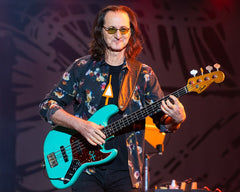

Certain places where people have enjoyed live music have become more than brick and mortar — they become mythology. The most iconic music venues are not just stages; they are proving grounds, cultural crossroads, and sacred spaces where movements are born. From psychedelic ballrooms to gritty punk clubs, these venues helped shape modern music history. Here are some of those places, in no particular order:
Fillmore Auditorium (San Francisco)
Few venues symbolize the 1960s counterculture like the Fillmore. Under the visionary promotion of Bill Graham, the Fillmore became the epicenter of the psychedelic rock explosion. Artists such as Grateful Dead, Jefferson Airplane, Janis Joplin, and Jimi Hendrix transformed concerts into immersive experiences of light shows, improvisation, and communal energy.
The Fillmore wasn’t just a venue — it was an experiment in youth culture. Its psychedelic posters, extended jams, and genre-blending bills reflected a generation pushing artistic and social boundaries. Even after closing in 1968 (and later reopening under different formats), the Fillmore name remains synonymous with rock authenticity.
Whisky a Go Go (Los Angeles)

Once inside the two-level Whisky a GoGo, people realize how small and intimate the space is
Opening in 1964 on the Sunset Strip, the Whisky a Go Go became synonymous with West Coast rock. It introduced American audiences to British Invasion acts and launched careers for artists such as The Doors, who served as the house band in 1966 before being fired for their provocative performances.
The club also hosted Janis Joplin, Led Zeppelin, and Guns N' Roses. With its go-go dancers in suspended cages and reputation for excess, the Whisky became a symbol of L.A.’s music scene — glamorous, dangerous, and influential.
CBGB (New York City)
If the Fillmore defined the hippie era, CBGB defined punk. Opened in 1973 by Hilly Kristal, CBGB (short for Country, BlueGrass, and Blues — ironically) became the birthplace of American punk and new wave.
Its grimy walls and narrow stage hosted early performances by Ramones, Television, Blondie, Talking Heads, and Patti Smith. These artists stripped rock back to raw essentials, replacing arena spectacle with urgency and attitude.
CBGB wasn’t glamorous. It was sticky floors, broken bathrooms, and creative freedom. When it closed in 2006, it marked the end of an era — but its influence still echoes in every DIY club scene around the world.
The Apollo Theater (New York City)

In Harlem stands one of the most historically significant stages in American music. The Apollo Theater’s famed Amateur Night launched the careers of legends including Ella Fitzgerald, James Brown, Aretha Franklin, and Stevie Wonder.
During segregation, the Apollo provided a vital platform for Black performers and audiences. It became central to the development of jazz, rhythm and blues, soul, and later hip-hop. Its “log” at center stage — which performers touch for luck — symbolizes generations of artistry and perseverance.
The Apollo remains active today, bridging history with contemporary voices.
The Cavern Club (Liverpool)

Before global stardom, there was a cellar in Liverpool. The Cavern Club is forever tied to The Beatles, who performed there nearly 300 times between 1961 and 1963. The sweaty lunchtime shows helped refine their sound and stagecraft before Beatlemania exploded.
Originally a jazz club, the Cavern evolved into the heart of the Merseybeat movement. Though the original basement was demolished in the 1970s, the venue was rebuilt and remains a pilgrimage site for Beatles fans worldwide. It stands as proof that global revolutions can begin in the smallest rooms.
Madison Square Garden (New York City)
While many iconic venues are intimate, Madison Square Garden represents the summit — the arena artists aspire to headline. Known simply as “The Garden,” it has hosted historic performances from Elton John, Billy Joel, Led Zeppelin, and Bruce Springsteen.
Billy Joel’s long-running residency cemented his identity as the venue’s hometown hero. From farewell tours to benefit concerts, Madison Square Garden is where careers are validated on the grandest scale.
Royal Albert Hall (London)

The Beatles wanted you to know how many holes it takes to fill the Albert Hall...
Opened in 1871, Royal Albert Hall bridges classical tradition and rock history. Originally built to promote the arts and sciences, it later welcomed groundbreaking amplified performances.
Notable moments include The Who, Eric Clapton, and Adele delivering career-defining shows beneath its vast domed ceiling. The Hall’s acoustics and grandeur lend a sense of occasion that elevates every performance.
The Roxy Theatre (West Hollywood music venue)

Co-founded by Lou Adler in 1973, The Roxy quickly became a showcase for emerging talent. Neil Young recorded part of his live album Tonight’s the Night there, and artists from Prince to Nirvana graced its stage.
Like CBGB and the Whisky, The Roxy thrived on proximity — fans inches from future legends.
Sun Studio (Memphis)
Though technically a recording studio rather than a concert hall, Sun Studio deserves mention as one of music’s most hallowed spaces. Founded by Sam Phillips, it birthed rock and roll by recording artists like Elvis Presley, Johnny Cash, Jerry Lee Lewis, and Carl Perkins.
Within its modest walls, blues, country, and gospel fused into a revolutionary new sound.
Why Venues Matter
What unites these spaces is not architecture but atmosphere. They fostered risk-taking. They allowed unknown artists to fail, experiment, and eventually explode into stardom. Many were small rooms that nurtured scenes before corporate sponsorship and global tours dominated the industry.
Iconic venues also reflect their cities. The Fillmore mirrored San Francisco’s counterculture idealism. CBGB embodied New York’s gritty creativity. The Cavern Club captured Liverpool’s working-class energy. Madison Square Garden symbolizes mainstream triumph.
Though some have closed or changed ownership, their legacies endure in recordings, photographs, posters, and stories passed down through generations of fans.
In an era of digital streaming and massive festivals, the mythology of these venues reminds us that music history is often written in tight spaces — in sweat-soaked basements, converted ballrooms, and neighborhood theaters — where the distance between performer and audience disappears, and something electric takes hold.
Because sometimes, the room itself becomes part of the music.
Interested in genuine RIAA Gold and Platinum and other record awards? Check out our selection here. We typically have several hundred in stock.
Want more content like this? If you're not a subscriber already, sign up for our free MusicGoldmine newsletter which comes out once a week. Go here to sign up and also get a code for 15% off your first purchase and our 100+ page MusicGoldmine Record Award Guide.
Be the envy of all your friends! Get MusicGoldmine.com Music History in your Facebook feed each day. Just follow us on Facebook here.
All photos: public domain, except Whisky a GoGo photo ©2025 MusicGoldmine.com